Student Group Formation and Initial Approval The school approved the group’s formation
The former student went on to file a lawsuit after…
and allowed the girl to advertise it at an activities fair, where she set up a table-top poster with the group’s mission statement and a sign that read, “I am the pro-life generation.” She had a shirt with the same slogan on it. But the school prevented her from hanging on school walls flyers that included photographs of students in front of the Supreme Court building in Washington carrying signs that read, “I Reject Abortion,” “Defund Planned Parenthood,” “I Am the Pro-Life Generation,” and other similar messages. The school has said its policy “categorically prohibited political content in flyers posted on its walls.”
School Policy and Administrative Response According to court papers, a school official told the girl that student group flyers that go on school walls should only have the name of the club and the location, time and date of its meeting – no photos of signage. According to court papers filed by the school, the girl and her mother then went to another school administrator to ask permission for the same flyer. The mother’s involvement raised concerns among school officials that the group was not truly student-led, court papers from the school said, resulting in the suspension of the club for the rest of the semester.
The former student went on to file a lawsuit after being denied her proposed flyers and having her club revoked.
Legal Representation and Precedent In court papers, she said an administrator expressed
concern about the flyers’ political nature, especially the “Defund Planned Parenthood” signage. The Alliance Defending Freedom, a conservative legal group that has brought other cases for anti-abortion plaintiffs, represents the girl. The controversy hinges on a 1988 Supreme Court ruling in a Missouri case, Hazelwood School District v.
Kuhlmeier. The court held that schools could restrict student speech in venues
that were not deemed “public forums” or when the speech at issue was inconsistent with the school’s educational mission.
From a conservative viewpoint, this refusal is a significant setback. It allows public schools to suppress conservative and religious viewpoints under the guise of “neutral” policy, while often tolerating progressive activism on issues like climate, race, or LGBTQ causes. The student sought only to advertise club meetings with images of peers holding signs-core political speech on the sanctity of life.
Administrators deemed it too “political,” rejected the flyers, and even…
Administrators deemed it too “political,” rejected the flyers, and even temporarily derecognized the club, despite approving dozens of other non-curricular groups.
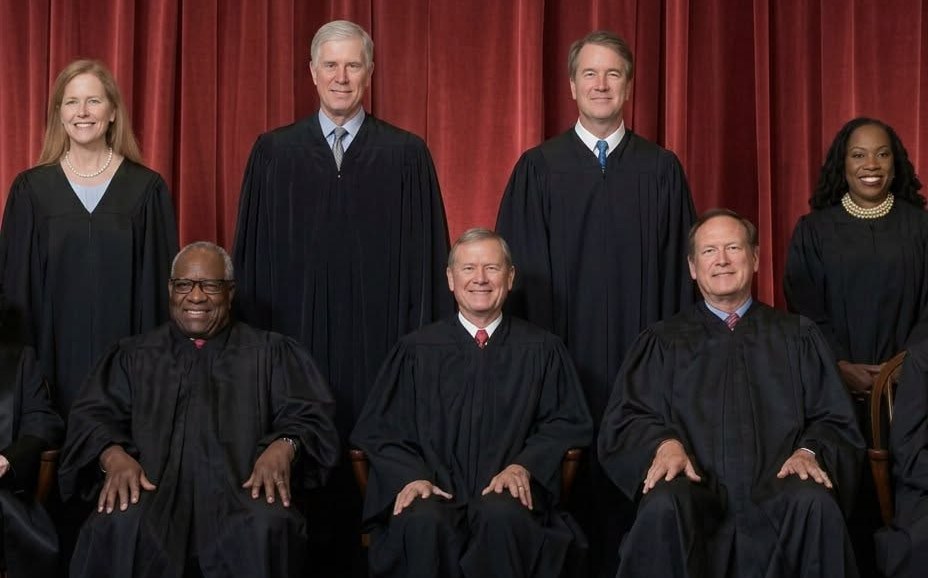
Conservative Concerns and First Amendment Implications Conservatives have argued that public schools are supposed to be forums for robust debate, not echo chambers enforcing progressive orthodoxy. By declining review, the Supreme Court leaves unresolved a circuit split and tension in precedent, empowering administrators nationwide to chill conservative student speech on abortion-the defining moral issue of our time. It signals to Christian and pro-life families that government institutions may marginalize their beliefs, undermining parental rights and the marketplace of ideas essential to a free society.
Without stronger protections, students advocating life, faith, and limited government face unequal treatment, eroding First Amendment principles conservatives have long defended.