Claudia Sheinbaum has emerged as one of the strongest international critics of the recent U.S. military operation in Venezuela that reportedly resulted in the capture of Venezuelan leader Nicolás Maduro.
In the days following the operation, Sheinbaum’s government issued a series of statements condemning what it described as a violation of international law, national sovereignty, and long-standing principles of non-intervention in Latin America.
Mexico Frames the Dispute Around International Law According to
Official remarks and international reporting, Mexico’s response was carefully framed around legal and diplomatic principles rather than direct ideological support for Maduro’s government.
The Mexican government specifically referenced Article 2(4) of the United Nations Charter, which prohibits the use of force against the territorial integrity or political independence of sovereign states.
Sheinbaum emphasized that:
sovereignty, territorial integrity, and peaceful conflict
Resolution remain core principles of Mexican foreign policy.
Her administration argued that unilateral military intervention risks destabilizing the broader region and weakening international norms designed to prevent escalation between nations.
“Zone of Peace” Doctrine Reaffirmed Mexican officials also invoked the idea that Latin America and the Caribbean constitute a “zone of peace,” a diplomatic concept repeatedly endorsed by regional organizations and Latin American governments over the years.
In speeches and press conferences, Sheinbaum reportedly argued
That:
military intervention in the hemisphere, foreign-led regime change, and violations of sovereignty could set dangerous precedents for future conflicts throughout the Americas.
Calls for U. N. and OAS Involvement Rather than bilateral confrontation with Washington, Mexico called for expanded multilateral diplomacy.
Sheinbaum urged
the United Nations, and the Organization of American States to take more active roles in mediation and regional stabilization efforts.
Her administration argued that international institutions should function as:
mediators, guarantors of sovereignty, and defenders of
International law, particularly during moments of escalating geopolitical tension.
Regional Reactions Intensify Mexico was not alone in criticizing the operation.
Several Latin American governments reportedly expressed concern that the U. S. action represented:
a dangerous escalation, interference in regional affairs, and a
Challenge to long-standing diplomatic norms. At the same time, reactions across the hemisphere remained deeply divided.
Some governments and opposition figures welcomed Maduro’s removal, citing:
allegations of authoritarianism, disputed elections, and human rights concerns. Others viewed the operation as an unacceptable precedent regardless of Maduro’s leadership record.
Rising Tensions Between Washington and Mexico The situation
Also added new strain to already sensitive U. S. –Mexico relations.
In recent months, political tensions between:
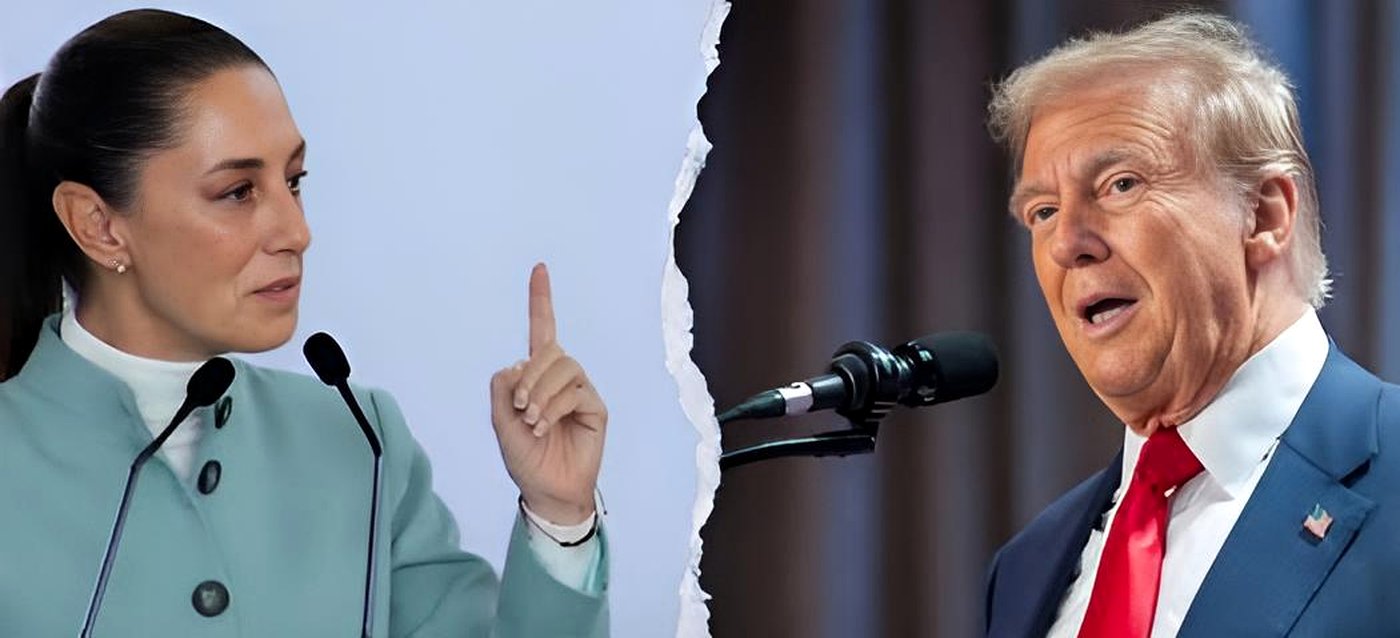
Donald Trump and Claudia Sheinbaum have grown over issues involving:
cartel violence, border security, military cooperation, and
National sovereignty. Trump has previously suggested tougher military options against cartels operating in Mexico, comments that Sheinbaum firmly rejected.
Mexico’s leadership has repeatedly stated:
“Cooperation, yes. Subordination and intervention, no.”
Broader Debate About Global Governance Sheinbaum’s response
Also tapped into wider international debates surrounding:
global governance, U. N. authority, unilateral military action, and the limits of international enforcement mechanisms. Critics of the Venezuela operation argued that the relatively limited response from major international institutions exposed weaknesses in the current global diplomatic system.
Supporters of the operation, meanwhile, defended it as necessary to address:
alleged narcotics trafficking, corruption, and regional
Instability tied to Maduro’s government. Sheinbaum’s Political Positioning Analysts note that Sheinbaum’s stance aligns closely with Mexico’s long-standing foreign policy doctrine emphasizing:
non-intervention, self-determination, and peaceful diplomatic engagement. Her approach also reflects domestic political priorities, where defending national sovereignty remains highly important across broad segments of Mexican society.
The issue has strengthened her image among supporters who view her as defending:
Latin American autonomy, constitutional principles, and resistance to foreign military intervention. International Attention Continues As global reactions continue unfolding, Sheinbaum’s response has drawn significant international attention because of:
Mexico’s geopolitical importance, its relationship with the United States, and its growing influence in regional diplomacy. Observers say the dispute may shape future debates about:
intervention policy, hemispheric security, and the role of international institutions in managing crises. Final Thoughts The aftermath of the U. S. operation in Venezuela has quickly evolved into more than a regional security issue.
It has become a broader diplomatic and legal debate involving:
sovereignty, international law, military intervention, and the balance of power in the Americas. Claudia Sheinbaum’s forceful response has positioned Mexico at the center of that debate, signaling that tensions over intervention, diplomacy, and regional autonomy are likely to remain major issues in hemispheric politics moving forward.