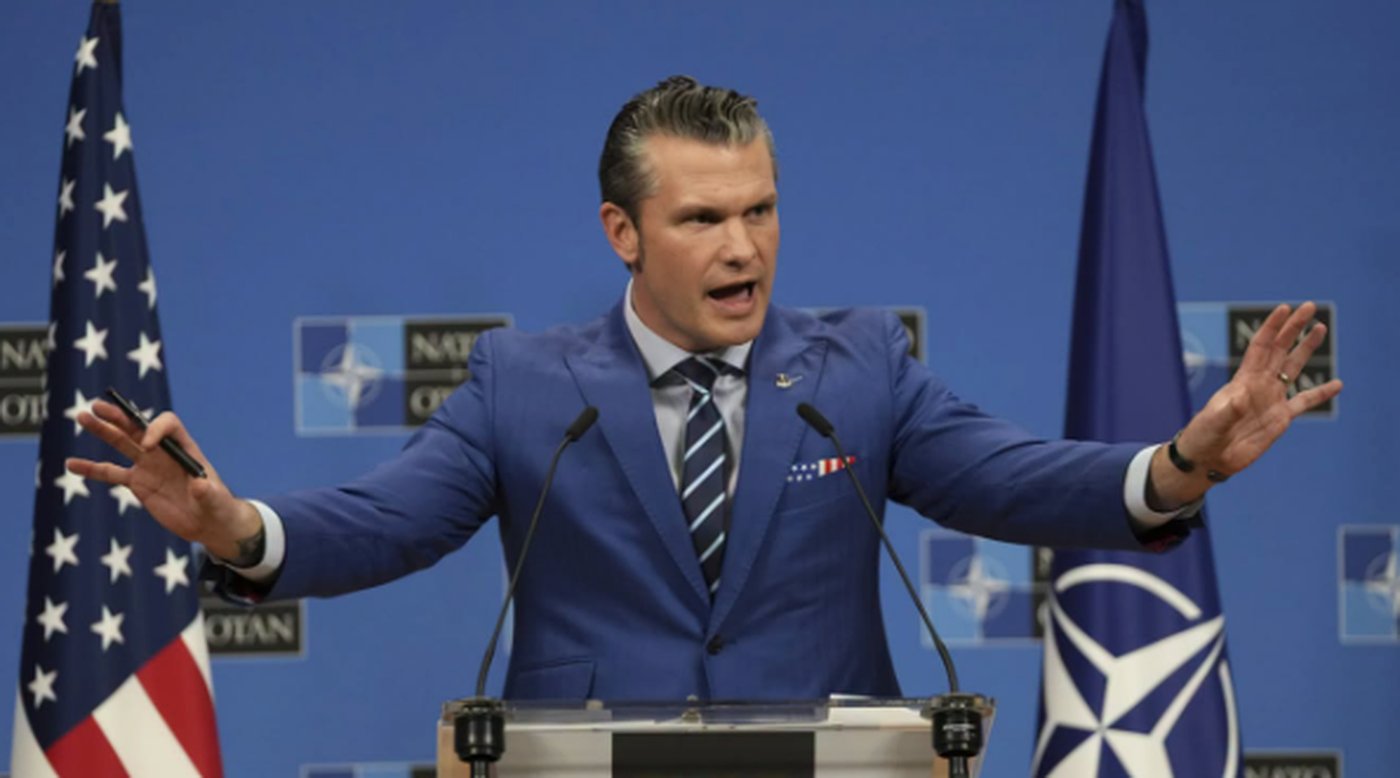
Pete Hegseth just slammed our NATO allies, calling them out as “shameful free riders” who expect America to foot the bill while they underfund their own defense. And he’s 100% right.
For decades, the United States has carried the massive financial and military
burden of NATO while many European nations spent their money on bloated welfare states and virtue-signaling instead of meeting their 2% defense commitments. America First means our allies must finally pull their own weight — no more riding on the backs of American taxpayers and troops.
Pete Hegseth is bringing real leadership and accountability to the Pentagon. No more blank checks for deadbeat allies. It’s time for fair burden-sharing or fair-weather friends can figure it out on their own.
Defense Secretary Pete Hegseth has renewed calls for NATO member nations to increase their defense spending, criticizing some allies for relying too heavily on the United States to shoulder the alliance’s military and financial responsibilities.
Speaking about the future of transatlantic security, Hegseth described certain NATO countries as “free riders,” arguing that several European nations have failed for years to meet the alliance’s long-standing target of spending at least 2% of their gross domestic product (GDP) on defense.
The debate over burden sharing within NATO is not new. For decades, U.S. leaders from both Republican and Democratic administrations have expressed frustration that American taxpayers contribute a disproportionate share of the alliance’s overall defense capabilities while some European partners spend less than agreed-upon targets.
Supporters of Hegseth’s position argue that increasing European defense budgets would strengthen
NATO, reduce dependence on U.S. military resources, and allow Washington to focus more attention on emerging challenges in the Indo-Pacific region.
Critics, however, warn that harsh rhetoric toward allies could strain relationships at a time when NATO faces ongoing security challenges, including Russia’s war in Ukraine and broader concerns about European stability. They also note that several NATO countries have significantly increased military spending in recent years.
According to NATO data, a growing number of member states have now reached or exceeded the 2% defense spending benchmark, though some nations still remain below the target.
Hegseth’s comments reflect a broader “America First” approach that emphasizes requiring allies to assume a larger share of collective defense responsibilities. Supporters believe this would create a fairer partnership, while opponents argue that strong alliances remain essential to U.S. national security and global stability.
As NATO prepares for future security challenges, the debate over burden sharing is expected to remain a central issue in discussions between the United States and its European partners