The Federal Aviation Administration is investigating an air traffic safety incident involving Marine One after commercial flights at a D.C.
airport were reportedly not halted before President Donald Trump’s helicopter departed the
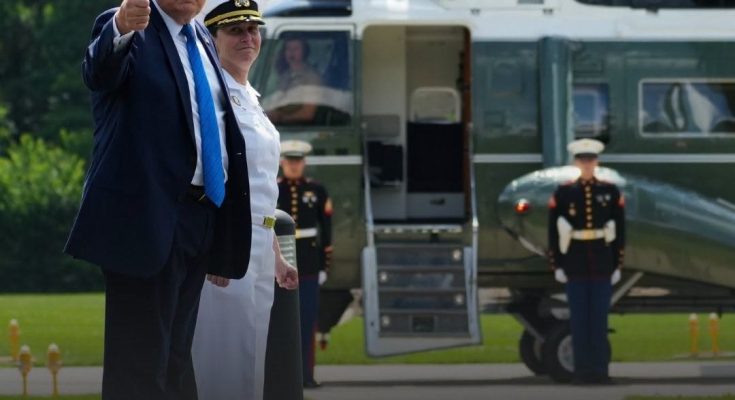
White House on Tuesday. The White House emphasized the president was never at risk.
“Marine One flights are piloted by some of the best aviators in the world, and at no point was the president in harm’s way,” White House spokesman Kush Desai told The Hill.
The incident occurred shortly after 2:30 p.m. EDT as Trump traveled aboard Marine One to Joint Base Andrews to board Air Force One for a trip to California.
According to reports, the presidential helicopter came within about a mile of an Envoy Air regional jet departing Ronald Reagan Washington National Airport for Pensacola, Florida.
The FAA said there was a “momentary loss of separation” between the aircraft but stressed the situation did not appear to be a dangerous close call.
“The air traffic controller was in contact with both the commercial pilot and Marine One pilot during the loss of separation. As the White House has said, the president was never in danger,” an FAA spokesperson said.
FAA regulations generally require aircraft to maintain at least 1.5 miles of
horizontal separation and 500 feet of vertical separation.
While officials are reviewing whether the required separation was maintained, both aircraft completed their flights safely.
According to air traffic control audio, Marine One’s crew acknowledged seeing the departing passenger jet and briefly delayed takeoff before continuing safely to Joint Base Andrews.
The FAA said it is reviewing why commercial operations were not paused before Marine One’s departure and is examining communications between air traffic controllers and the helicopter crew.
“We are continuing to review the incident and will implement any appropriate corrective actions based on our findings,” the FAA spokesperson said.
The National Transportation Safety Board also is investigating the incident.
The review comes as federal officials continue heightened scrutiny of operations around Reagan National following the January 2025 midair collision involving an Army Black Hawk helicopter and an American Airlines regional jet.