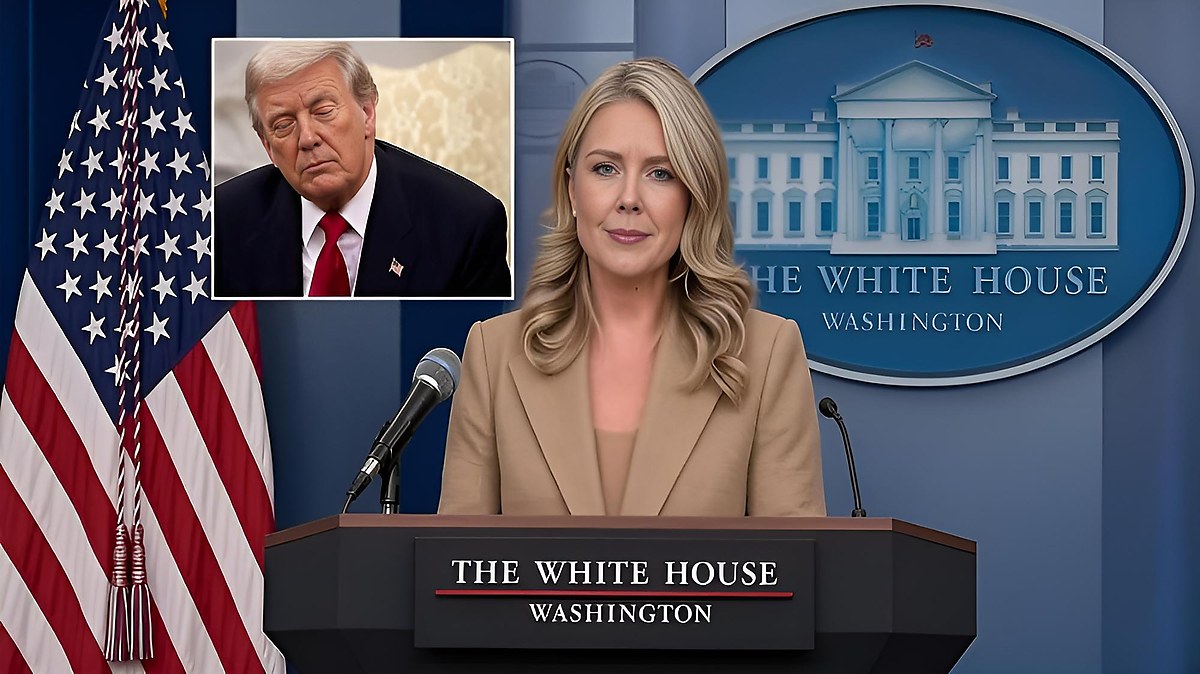
White House Press Secretary Karoline Leavitt defended the Trump administration’s changes to media access, arguing that the White House has expanded opportunities for a broader range of news organizations rather than restricting coverage.
Speaking with Axios co-founder Mike Allen at an April 2025 event, Leavitt
rejected the characterization of the administration’s changes as limitations on the press. She said the White House wanted to give more outlets, including newer and digital-focused organizations, opportunities to participate in presidential coverage.
Leavitt specifically questioned why a small group of traditional news organizations should have continuing access to a limited presidential press pool. She argued that the changing media landscape requires the White House to recognize independent journalists, online outlets and other newer forms of news coverage.
The administration had announced in January that it would open the briefing room to additional media voices, including independent journalists, podcasters, social-media creators and other news organizations that met its credentialing requirements.
The changes have drawn criticism from the White House Correspondents’ Association, which argued that the government should not control which independent journalists receive access to the president. The organization said traditional wire services, including The Associated Press, Bloomberg and Reuters, play an important role because their reporting is distributed rapidly to other news organizations and millions of readers.
The disagreement has also involved the White House’s decision to take greater
control over portions of the press-pool rotation. Axios reported that the administration’s approach represented a shift from previous arrangements in which the White House Correspondents’ Association played a central role in determining pool participation.
Leavitt said the administration’s objective was not ideological, but rather to broaden the range of journalists able to cover the president.
The debate also revived comparisons between Trump and former President Joe Biden regarding media appearances. However, claims about the exact number of interviews and press conferences should be treated carefully because different organizations use different methodologies when counting presidential interactions with journalists.
The broader dispute reflects a significant change in how the White House approaches the modern media environment. Traditional news organizations continue to argue for established press-pool practices, while the Trump administration has emphasized greater participation by digital and nontraditional outlets.
The disagreement remains part of a larger national conversation about presidential transparency, press access and the evolving relationship between government and the news media.