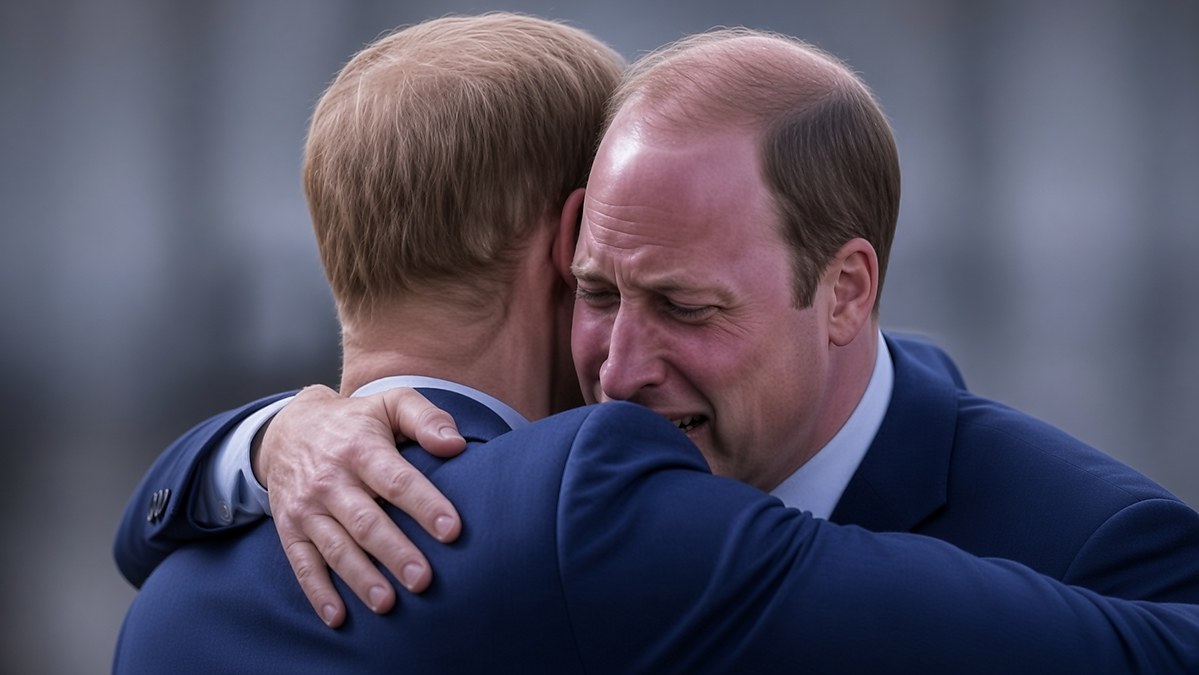
Claims circulating online and in royal-focused publications have described an alleged private conversation involving King Charles and Prince William, portraying it as an emotional reckoning over the past.
However, there is no reliable public confirmation of the specific private conversation or the alleged confession described in those reports. Private royal discussions are difficult to independently verify, and claims attributed to unnamed sources should be treated cautiously. Diana’s Death Changed the Family Forever
What is documented is that the events surrounding Diana’s death and funeral continue to generate new accounts and controversy. Princess Diana died in a Paris car crash on Aug. 31, 1997. William was 15 years old and Harry was 12. The funeral that followed became one of the most recognizable moments in modern British history.
Millions watched as the two young princes walked behind their mother’s coffin through London. For the public, the images became symbols of national mourning. For William and Harry, they represented an intensely personal experience that unfolded under extraordinary scrutiny. Over the years, both brothers have spoken publicly about the impact of losing their mother at
such a young age. Their subsequent lives, however, have followed markedly different paths. William remained closely connected to the institution into which he was born and eventually became heir to the throne. Harry stepped away from official royal duties with Meghan, Duchess of Sussex, in 2020 and later moved to the United States. Those different
decisions contributed to a much wider family rift. The latest controversy comes as Diana’s brother, Charles Spencer, has published his memoir, Swan Song: Diana, My Sister. New Claims Reopen Old Questions
Spencer has made a series of claims about conversations with the royal family following Diana’s death, including an allegation that then-Prince Charles told him, “we’ll forget her soon enough.”
Spencer has defended his recollection and said he believes he is accurately describing what occurred. Buckingham Palace has disputed the account. In an unusually direct response, the palace suggested that grief can affect judgment and memory. King Charles’s response has drawn renewed attention because the royal household traditionally avoids publicly engaging with personal disputes. The
dispute illustrates how memories surrounding Diana’s death remain contested nearly 30 years later. For Prince William, the legacy of his mother is inseparable from his own development within the monarchy. He experienced Diana’s death as a teenager and later became the future king. His public responsibilities require him to represent an institution that was itself
central to the circumstances surrounding his childhood. That creates a complicated personal landscape. William’s Position Is Uniquely Complicated
William can have a relationship with his father while also carrying memories of his parents’ failed marriage. He can recognize the importance of the monarchy while acknowledging that royal life came with extraordinary personal pressures. And he can maintain his public responsibilities while privately confronting memories that cannot simply be erased by titles or duty.
There is no evidence that a particular private conversation between Charles and William has resolved those tensions. Prince Harry’s relationship with his father and brother has become another major chapter in the family’s story. Harry has spoken publicly about grief, family conflict and his experiences as a member of the royal family. His memoir and
subsequent interviews have provided a much more personal account of his relationship with the monarchy. His recent return to Britain with Meghan has also renewed attention on the family’s relationships. King Charles confirmed in September that Harry and Meghan remain private, non-working members of the royal family and will not use their HRH styles. The
couple’s return does not, by itself, establish that a broader reconciliation has taken place. The continuing interest in Diana’s story reflects a larger reality: families do not necessarily move forward simply because institutions do. Harry Remains Part of the Same History
The monarchy has continued through successive generations. Charles became king. William became Prince of Wales and heir to the throne. Harry established a separate life outside the working royal family. But the emotional history connecting them remains. No apology could restore Diana to her sons. No private conversation could recreate their childhood. And no public
statement could definitively settle every disputed memory surrounding the events of 1997. If reconciliation is possible within the family, it would likely depend on private relationships rather than carefully staged public appearances. For now, the most firmly documented development is not an alleged confession between Charles and William, but the continuing debate over memories of
Diana’s final days and the lasting consequences of her death. Nearly three decades later, her absence remains one of the central facts around which the family’s modern history continues to unfold. The titles have changed, generations have moved forward and the monarchy itself has entered a new era. Yet for William and Harry, Diana will always be more than a historical figure. She was their mother.