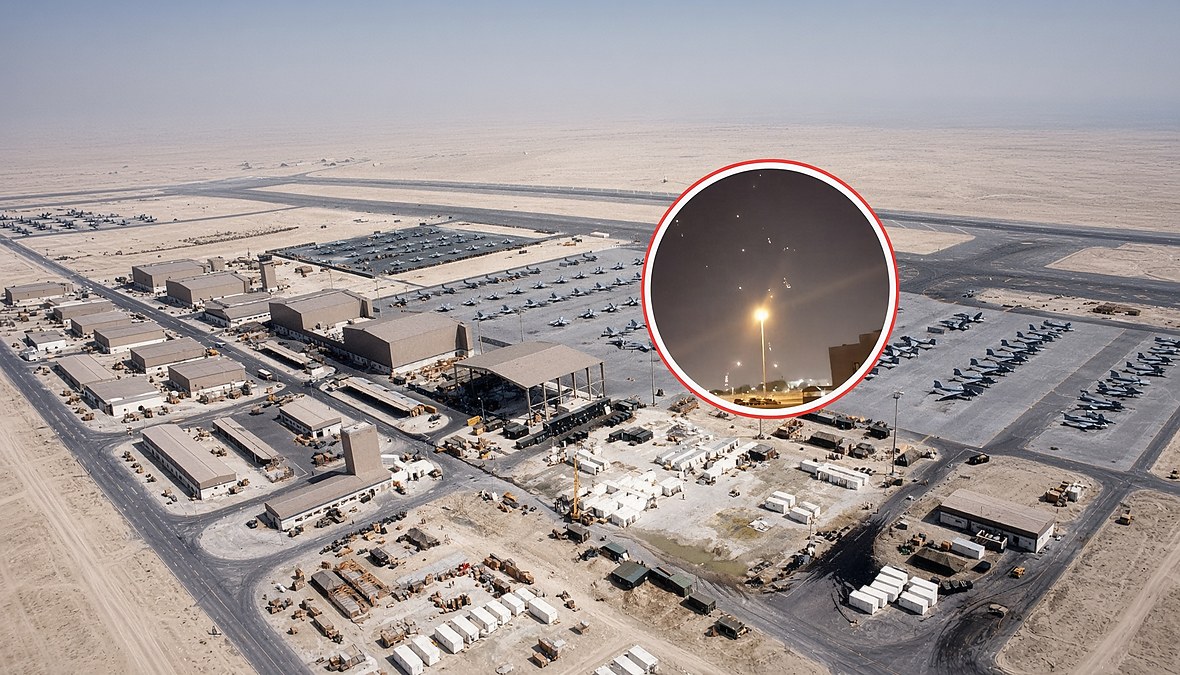
PERSIAN GULF — Tensions across the Middle East have intensified as Iran has launched missile and drone attacks against locations associated with U. S. military forces and strategic infrastructure across the Persian Gulf, prompting heightened security measures in Bahrain, Qatar, Kuwait and the United Arab Emirates.
The attacks represent another major escalation in the confrontation between Iran and
the United States, raising concerns that continued military exchanges could increasingly draw neighboring Gulf states into the conflict. American forces maintain significant military facilities throughout the region, making several Gulf nations strategically important to U. S. operations while also exposing them to potential retaliation during periods of heightened tensions. UAE Raises Security Alert In the
United Arab Emirates, security forces have remained on heightened alert around Abu Dhabi and military installations associated with U. S. operations. Al Dhafra Air Base, located near the capital, is a major strategic facility with a long-standing U. S. military presence. Iranian forces have previously claimed attacks against American-linked facilities in the UAE using missiles
and drones. Reports of aerial interceptions and explosions have added to concerns over the ability of regional defenses to protect military installations, airports, energy facilities and other critical infrastructure from multiple types of incoming threats. Gulf governments have invested heavily in advanced air-defense systems, but the expanding range and frequency of missile and drone threats
continue to present significant security challenges. Bahrain at the Center of Tensions
Bahrain remains particularly important because it hosts the headquarters of the U.S.
Navy’s Fifth Fleet. The American naval presence makes Bahrain one of Washington’s most strategically significant military locations in the Gulf. Facilities in and around Jufair have previously been identified in Iranian military statements as targets during periods of confrontation. Air-raid alerts and defensive operations have previously placed residents on heightened alert as authorities responded to
incoming missiles and drones. Because Bahrain is a relatively small island nation, attacks near military facilities can also raise concerns about civilian areas, transportation networks and critical infrastructure. Qatar Faces Threats Near Al Udeid Qatar is similarly exposed because it hosts Al Udeid Air Base, a major U. S. military installation and regional command center.
The facility plays an important role in American military operations throughout the Middle East and hosts thousands of U. S. personnel. Any attack involving Al Udeid could therefore have consequences extending beyond Qatar itself. Missile and drone activity near the base can affect military operations while forcing Qatari authorities to increase protective measures for surrounding
communities. Qatari air defenses have previously been activated during Iranian attacks, highlighting the growing importance of coordinated regional defense systems. Kuwait Also on Alert
Kuwait has faced similar threats, with missile and drone attacks directed toward
locations connected to U. S. military operations. Iranian officials have claimed strikes against American-linked facilities in Kuwait, while Kuwaiti authorities have urged residents to remain vigilant and follow official emergency instructions. The developments illustrate how quickly military confrontations can spread across national borders when foreign forces are stationed throughout the region. Strait of Hormuz Remains
a Major Concern Beyond military installations, the conflict carries potentially significant consequences for global energy markets. The Strait of Hormuz remains one of the world’s most important maritime energy routes, carrying a substantial portion of global oil and gas shipments. Any prolonged disruption or military confrontation around the waterway could affect shipping, insurance costs and
international energy prices. The threat to commercial vessels has already increased uncertainty for shipping companies operating in and around the Persian Gulf. Continued attacks could further complicate efforts to maintain safe maritime transportation. Region Remains on High Alert The latest escalation leaves Gulf governments facing a difficult security environment as they attempt to protect their
populations while hosting American military forces.
For Washington, the challenge is protecting personnel and strategic facilities without allowing
attacks to trigger a wider regional conflict. For Tehran, continued military pressure risks further confrontation with the United States and its regional partners. Meanwhile, governments across the Gulf are closely monitoring missile activity, airspace and shipping routes for signs of additional attacks. With military tensions remaining high and diplomatic efforts facing significant uncertainty, the Persian
Gulf remains a critical flashpoint where another round of retaliation could have consequences extending far beyond the region.