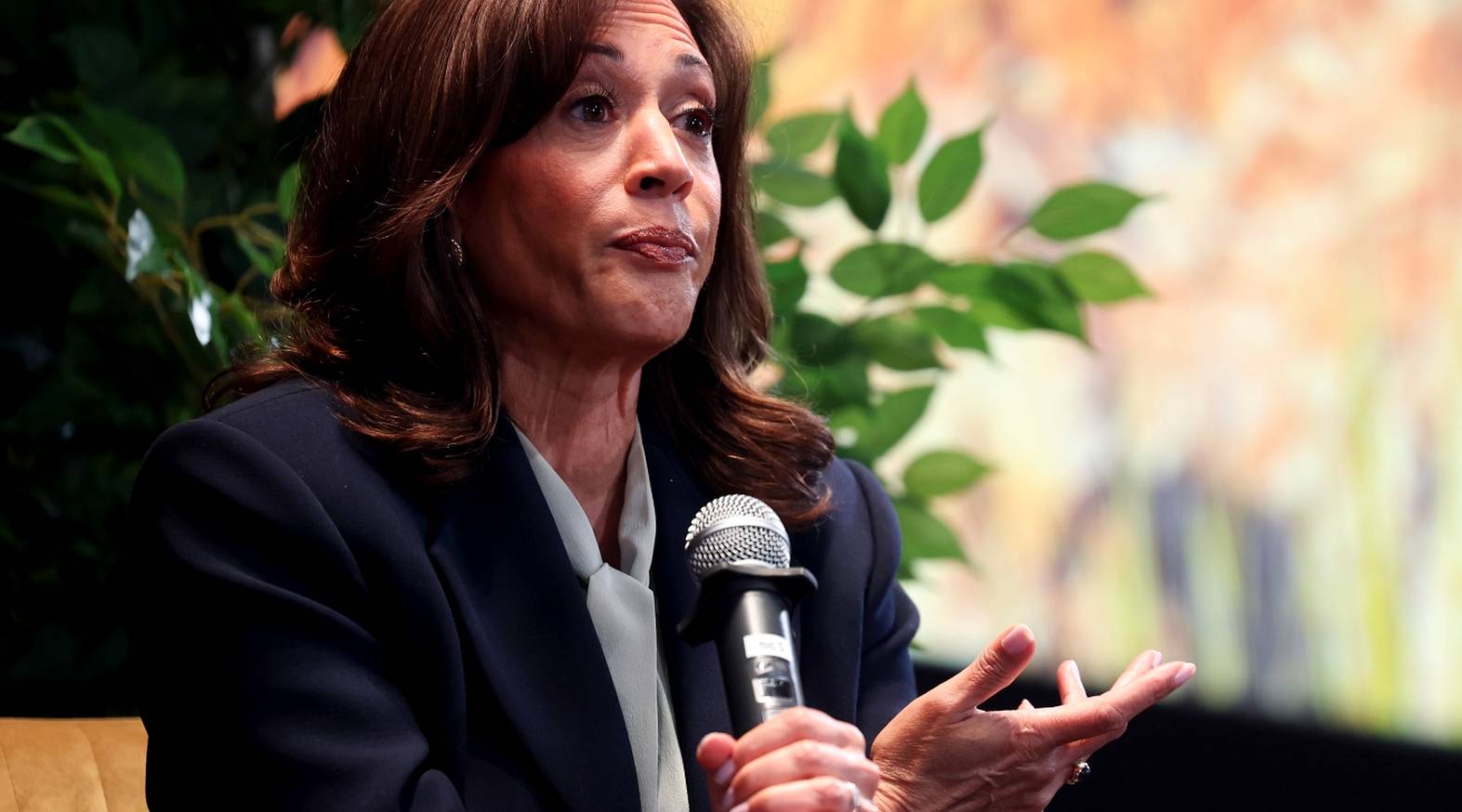
Former Vice President Kamala Harris is facing backlash after proposing a sweeping series of structural political reforms during a livestream discussion, including expanding the Supreme Court, revisiting the Electoral College, and opening discussions on multi-member congressional districts as Democrats regroup following major electoral setbacks.
Speaking Wednesday during a livestream hosted by the “Win with Black Women” podcast, Harris said Democrats need what she described as an “expanded playbook” heading into the 2026 midterms and beyond.
“I think that we need an expanded playbook in a way that we
Invite all ideas,” Harris said. “This is a moment where there are no bad ideas, a no bad idea brainstorm is what I’d like to call it.”
Among the proposals Harris floated were reforms to the Electoral College, expansion of the Supreme Court, ethics rules targeting Supreme Court justices, statehood for Washington, D. C. , and Puerto Rico, and changes to congressional representation through multi-member districts.
Harris specifically referenced “Supreme Court reform, which includes expanding the Supreme Court,” reviving a controversial proposal that Democrats debated heavily during the Biden administration but ultimately failed to advance in Congress.
The former vice president also argued that Senate Democrats
Should impose stricter standards on Supreme Court nominees and justices, saying lawmakers should “put into place rules to penalize people for lying” during confirmation processes.
The remarks quickly triggered criticism from conservatives and Republican officials, who accused Harris of endorsing institutional changes aimed at consolidating Democratic political power after the party’s recent election losses.
Sen. Mike Lee mocked the proposals online, joking, “Well, maybe a few bad ideas.”
Others framed Harris’ comments as evidence that portions of the
Democratic Party are increasingly focused on changing governing institutions after losing both the Electoral College and the national popular vote in 2024.
OutKick writer Ian Miller noted that Harris’ proposals came despite Democrats also losing the popular vote, writing, “The funniest part about this is that she lost the popular vote too.”
The controversy arrives as Harris continues fueling speculation about a possible 2028 presidential campaign. Since leaving office, the former vice president has remained active in Democratic political circles while testing broader messaging themes about institutional reform, voting systems, and judicial power.
Her latest comments also land amid a growing national debate
Over the role of courts and electoral systems following several high-profile redistricting battles and Supreme Court rulings.
In recent weeks, Democrats have increasingly criticized the judiciary after setbacks involving voting maps, election law disputes, and federal agency authority. Republicans, meanwhile, have accused Democrats of escalating attacks on judicial independence whenever court rulings go against progressive priorities.
The Supreme Court expansion proposal remains especially controversial. Critics often describe “court packing” as an attempt to alter the ideological makeup of the judiciary for partisan gain. Supporters argue the court has become too politically imbalanced and requires reform after years of contentious confirmation battles.
The Constitution does not set the number of Supreme Court
Justices, meaning Congress could theoretically expand the court through legislation. However, such a move would likely trigger one of the largest institutional fights in modern American politics.
Harris’ remarks about the Electoral College also revived a long-running Democratic debate dating back years. Some Democrats argue the system unfairly advantages Republicans because presidential candidates can win the White House without securing the national popular vote. Republicans counter that the Electoral College protects smaller states and preserves federalism.
The suggestion of multi-member congressional districts was another notable element of Harris’ comments. Such systems, used in some countries internationally, could significantly alter how House elections operate in the United States and potentially weaken the current geographic district structure.
The comments also come as Democrats continue debating the
Party’s future direction after significant electoral defeats in 2024 and ongoing internal divisions between moderates and progressives heading into the next presidential cycle.