President Donald Trump and Elon Musk have repaired a once-shattered relationship that appeared beyond saving.
Now, Musk, the world’s richest man, is preparing to pour significant resources
into helping Republicans hold Congress this fall.
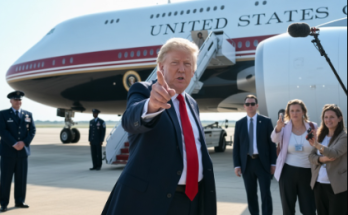
Nearly a year after Musk publicly blasted Trump and their alliance collapsed in a spectacular social media feud, the two men shared a friendly flight aboard Air Force One to China in May.
According to people on the plane, Musk discussed plans to build new factories in the United States while Trump asked about one of Musk’s young sons and recalled a recent space-launch video.
Musk even reminisced with White House advisers about the excitement of the 2024 campaign.
Then came the news Trump’s team had long hoped to hear: Musk intends to aid Republicans in the November midterms.
People familiar with the strategy say the Tesla and SpaceX leader plans to spend at least $100 million on a voter-turnout operation aimed at keeping the GOP in control of Congress.
The rapprochement followed months of quiet diplomacy. Back-channel phone calls, encouragement from mutual friends, invitations to Mar-a-Lago, and a White House gathering all played roles.
The unexpected assassination of conservative activist Charlie Kirk, who had worked in his final months to bring the two powerful figures closer together, also helped move the process forward.
Privately, Trump has told aides that he and Musk will never be as close as they once were.
Yet the two men now speak roughly once a month, discussing artificial intelligence, China, and global events, according to people with knowledge of the conversations.
The renewed partnership is important for both.
Musk’s financial muscle and influence on X give Republicans a major edge in a critical election cycle.
For Trump, the support of the innovative billionaire who once helped deliver the 2024 victory reinforces his agenda of American energy dominance, space exploration, and technological leadership.
Their earlier split erupted after Musk criticized a major spending bill as wasteful, leading to days of public attacks that shocked political observers.
Musk had been a constant presence in the early days of the
administration, even briefly leading efforts to slash government waste.
The public rupture threatened to fracture the powerful coalition of traditional conservatives and tech innovators that propelled Trump’s return to the White House.
Now, with midterms approaching, the practical benefits of cooperation have outweighed old grievances.
Musk’s planned investment in turnout operations signals a clear commitment to Republican priorities at a time when Democrats are desperate to regain ground.
Conservatives see the reconciliation as a win for free speech, economic growth, and national strength—values both men have championed against left-wing excesses.
The China trip itself underscored the strategic alignment.
As the presidential delegation engaged Beijing, Musk’s presence highlighted the administration’s focus on fair trade, domestic manufacturing, and technological competition with America’s chief rival.
While the personal bond may never fully return to its former intensity, the working relationship is back on track.
For Republicans facing a tough map and determined Democratic opposition, Musk’s renewed involvement offers a powerful boost.
For America, it represents another chapter in an unlikely but consequential alliance between a president determined to put the country first and a visionary entrepreneur willing to put his fortune behind that vision.
Recently, Musk injected $5 million into a super PAC supporting Republican Vivek Ramaswamy’s bid for governor of Ohio.
The donation, made in May, adds significant firepower to Ramaswamy’s already formidable campaign war chest as he prepares for a high-stakes general election matchup against Democrat Amy Acton.
Ramaswamy, the biotech entrepreneur and 2024 presidential candidate who won the GOP primary in May, has positioned himself as an outsider focused on cutting taxes, spurring economic growth, and strengthening Ohio’s workforce.
The Ohio Chamber of Commerce Political Action Committee endorsed him this week, praising those exact priorities during a speech at Kimball Midwest.